[Museum Anniversary] LCSD Museums x City Story:
"Museum Anniversary" Brick Set Edition
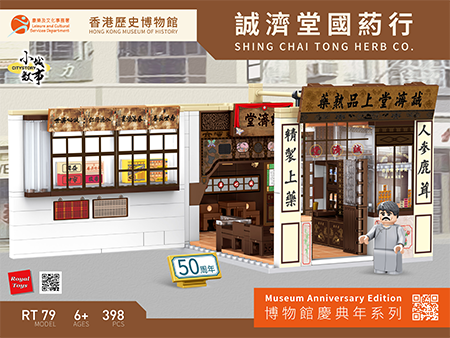
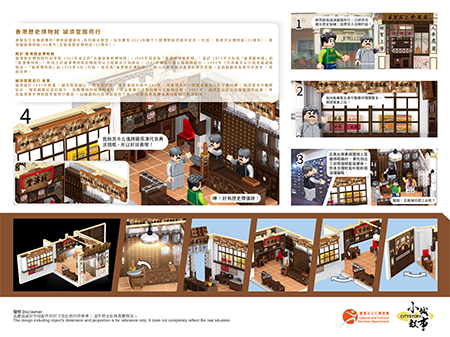
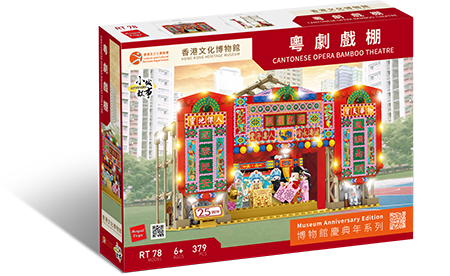
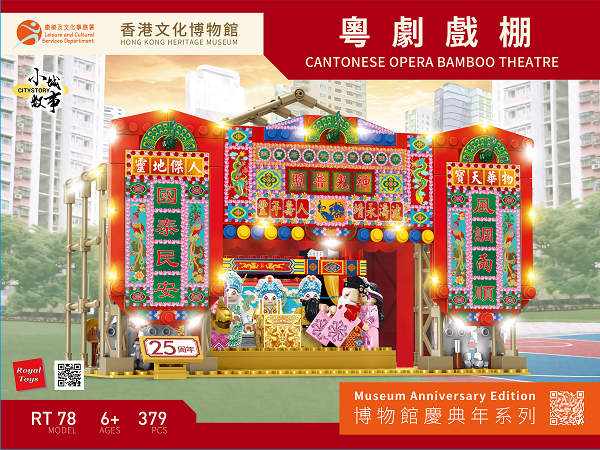
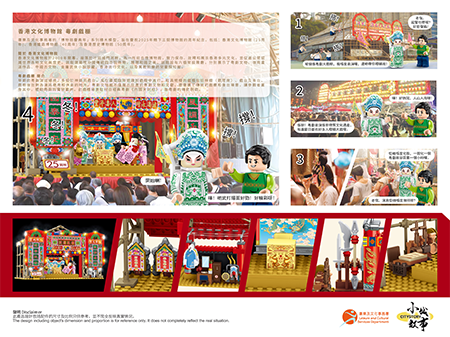
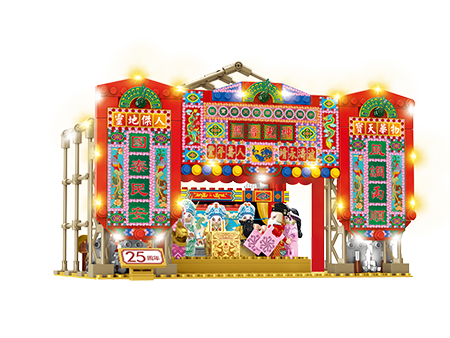
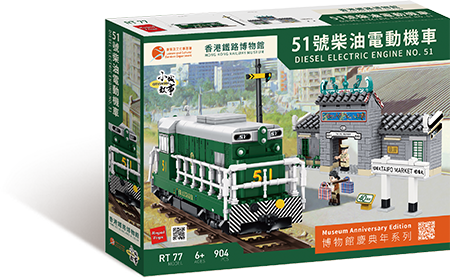
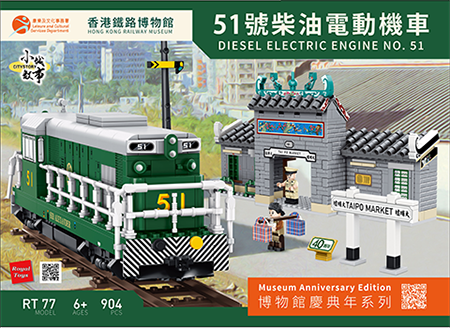
LCSD collaborates with the local brand Royal Toys "City Story Brick Sets Series" to launch IP products "Museum Anniversary Brick Set Edition", including "Hong Kong Heritage Museum 25th Anniversary - Cantonese Opera Bamboo Theatre", "Hong Kong Railway Museum 40th Anniversary - Diesel Electric Engine No. 51" and "Hong Kong Museum of History 50th Anniversary - Shing Chai Tong Herb Co.".
The Cantonese Opera Heritage Hall at the Hong Kong Heritage Museum
Hong Kong Heritage Museum officially opened on 17 December 2000, with the Cantonese Opera Heritage Hall being one of its permanent exhibitions, showcasing operatic treasures from the museum's collection. Through documents, costumes and makeup, performance styles and a reconstructed bamboo shed theatre along with a variety of multimedia programs, the development and characteristics of Cantonese opera are introduced, recognizing the contributions of Cantonese opera practitioners to the art form.
Bamboo Shed Theatre for Cantonese Opera
In the early days, Cantonese opera performances were mostly held on temple stages or temporary sheds set up in rural areas. The simplest form of theatre could be just a few square tables put together. More elaborate shed theatre included audience seating area, the performance stage and the backstage area. The seating area was usually divided into left and right sections, traditionally to separate male and female audiences. Between the seating area and the stage, there was an open space called bik dei, where villagers could watch the performance for free. The entire shed theatre, including the seating area and bik dei, was covered under the same roof, which had a ventilation layer shaped like a pavilion hat, hence the name sin gan shed theatre. The backstage area was reserved for performers to use and rest. The structure was primarily constructed with bamboo and wood, with palm leaves used for covering, making it highly flammable. It was not until the early 1960s that the bamboo shed theatres began to be built with galvanized iron.
Details: https://www.museums.gov.hk/en/web/portal/mf2025-museum-anniversary-outlets.html
Launch Date: November 2025
Hong Kong Railway Museum
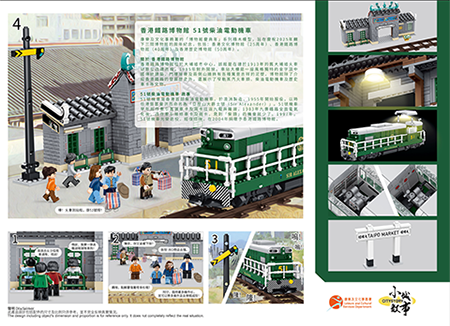
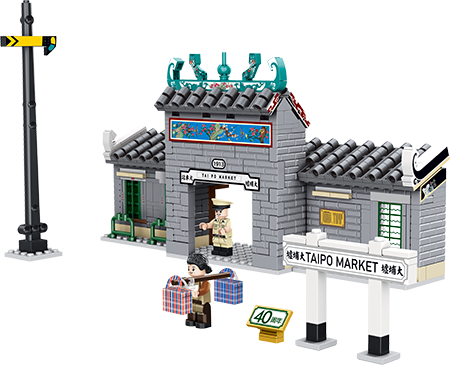
Situated in the town centre of Tai Po Market, Hong Kong Railway Museum was converted from the Old Tai Po Market Railway Station which was erected in 1913 and the museum was opened to public starting 1985. The station building was designed in a traditional Chinese style with a pitched roof. The ridge and gable walls of the building are adorned with auspicious Chinese motifs. In addition to introducing the development history of Hong Kong Railway, it also showcases a narrow gauge steam locomotive, diesel electric engines and historical coaches.
The Story of Diesel Electric Engine No.51
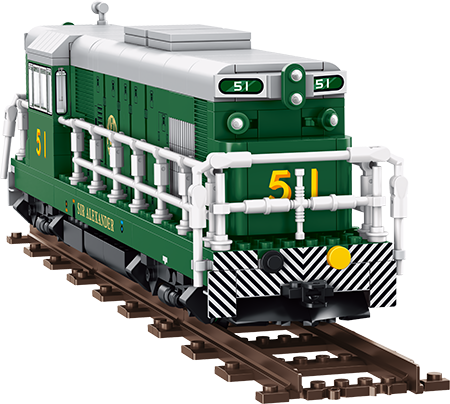
Made in Australia and imported into Hong Kong in 1955, locomotives No. 51 was the first diesel electric engines ever to run on Hong Kong's rails. It was named “Sir Alexander” after former governor Sir Alexander Grantham. Locomotive No. 51 was used in its early years to haul passenger and freight trucks between Kowloon and Lo Wu. After the full electrification of the Kowloon-Canton Railway in 1983, all diesel electric engines were retired and switched to hauling maintenance trains and freight trains. In 1997, No. 51 was honorably retired and after restoration, it was donated to the Hong Kong Railway Museum in 2004.
Details: https://www.museums.gov.hk/en/web/portal/mf2025-museum-anniversary-outlets.html
Launch Date: November 2025
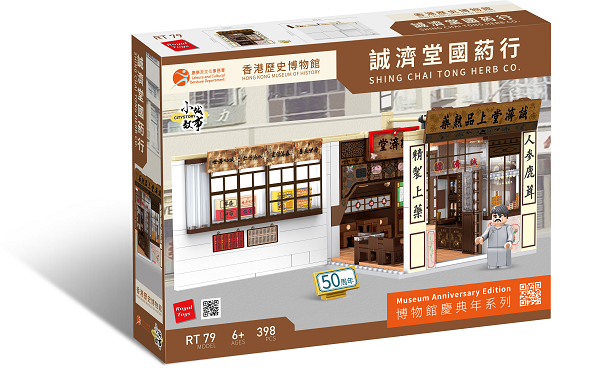
Hong Kong Museum of History
The Hong Kong Museum of History originated in the City Hall Art Gallery and Museum which was founded in 1962. It was renamed the City Museum and Art Gallery in 1969, and was split into the Hong Kong Museum of Art and the Hong Kong Museum of History in 1975. The latter was initially housed in rented premises in Star House, Tsim Sha Tsui. It was then relocated to a temporary site in Kowloon Park in 1983 and the present premises on Chatham Road South, Tsim Sha Tsui, in July 1998. The museum adopted its current Chinese name on 1 April 1998. It is dedicated to showcasing the depth of Hong Kong history to the public, while encouraging them to explore the histories of both China and the world.
The story of Shing Chai Tong Herb Co.
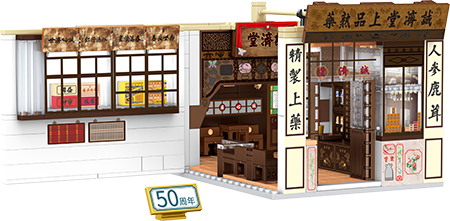
Shing Chai Tong Herb Co. opened in 1885 at 180 Queen’s Road Central, making it one of the oldest herbal medicine shops in Hong Kong. Its name embodies the value of sincerity and community service. Shing Chai Tong hosted a Chinese medicine practitioner to advise patients on diagnoses and prescriptions. It sold a wide variety of Chinese medicinal herbs and house-made ointments, pills, pellets and powders. In 1980, Shing Chai Tong closed as part of a community redevelopment project. Fortunately, the Hong Kong Museum of History was able to preserve the entire Chinese medicine shop, from shopfront to the interior furnishings, enabling it to be vividly recreated for visitors through exhibitions.
Details: https://www.museums.gov.hk/en/web/portal/mf2025-museum-anniversary-outlets.html
Launch Date: November 2025